Minimalist furniture pares a room’s furnishings and visual detail down to what is useful, comfortable, and meaningful. It is not simply furniture with plain lines: good minimalism balances function, proportion, materials, and empty space. That balance matters in homes where space is limited and in a consumer culture shaped by resource use: the United Nations Environment Programme estimates that buildings and construction account for about 37% of global energy- and process-related carbon dioxide emissions. Understanding minimalist design means looking at its defining principles, practical forms, environmental trade-offs, and real-world use—not assuming that fewer objects automatically make a room better.
Minimalist Furniture Design: Definition and Core Characteristics
Minimalist furniture is furniture designed to meet essential needs with restrained form, limited ornament, and deliberate use of space. The design approach is associated with the broader modernist principle that form should follow function, as popularized by architect Louis Sullivan. In furniture, this can mean a table with a clear structural purpose, a chair without decorative excess, or storage that integrates into a wall rather than dominating the room.
Minimalism has no single official checklist or universally accepted numerical threshold. Its recognizable characteristics include simple geometry, visual clarity, a restrained palette, practical construction, and careful attention to proportion. The result should feel composed rather than merely empty: each piece has a reason to be present, and the remaining space is part of the design.
This distinction is important because sparse rooms can still be wasteful. A poorly made chair replaced every few years is not a more responsible choice simply because it has a simple silhouette. Minimalist furniture works best when reduction in visual clutter is matched by durability, repairability, and an appropriate fit for the people using the room.
Function Before Ornament
Function before ornament means that a furniture item’s shape and features arise primarily from what it needs to do. A dining table needs a stable surface and sufficient legroom; decorative trim is optional. This principle does not prohibit beauty. Instead, it locates beauty in useful details such as balanced proportions, well-finished joints, tactile materials, and a shape that is comfortable to use.
Visual Restraint and Negative Space
Visual restraint limits competing patterns, colors, and forms so the eye can read a room easily. Negative space—the unoccupied area around and between objects—is an active design element, not wasted space. A clear route through a room can improve circulation, while open areas around a sofa or table help its scale and purpose remain legible. The right amount of open space depends on room dimensions, accessibility needs, and daily routines.
Material Honesty and Durability
Material honesty describes using and presenting materials in a way that makes their character apparent rather than disguising them with unnecessary finishes or imitation. Wood grain, metal structure, and fabric texture can supply visual interest without ornament. Durability is equally important: the U.S. Environmental Protection Agency’s waste guidance emphasizes prevention and reuse as preferable to disposal. Choosing furniture that can be maintained, repaired, or reused supports that principle more directly than choosing an item solely for its minimalist appearance.
Minimalist Furniture Types: Seating, Storage, and Multifunctional Pieces
The principles of minimalist furniture take different forms depending on the job a room must do. Common types include streamlined seating, built-in or concealed storage, adaptable tables, and multifunctional furniture. These are not separate styles so much as practical categories: each reduces visual or spatial demands while preserving everyday utility.
Streamlined Seating
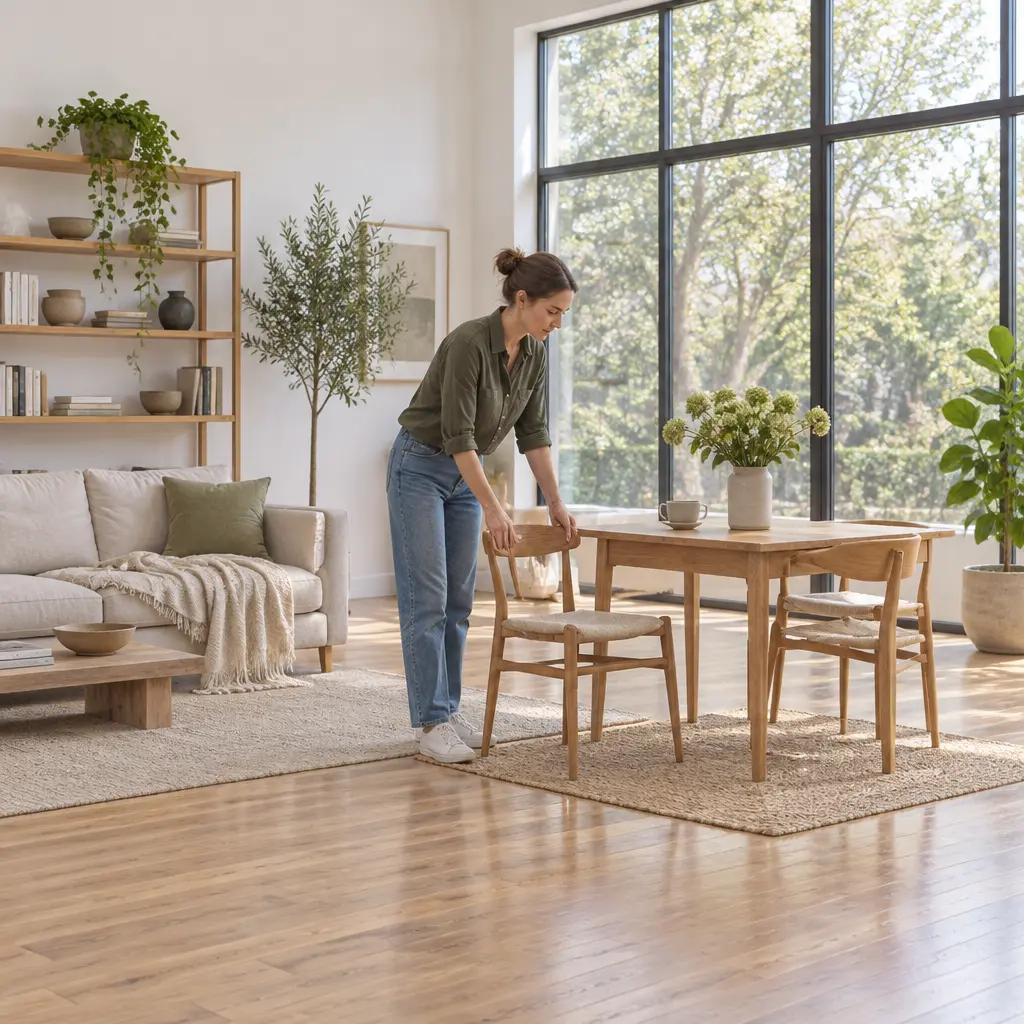
Minimalist seating uses a clear silhouette and avoids unnecessary bulk, but it still needs to support the body. A slim dining chair can make a compact room feel less crowded; a sofa with a simple profile can serve as a calm visual anchor. Before buying, assess seat height, depth, arm position, upholstery maintenance, and the needs of all users. A visually light chair that is uncomfortable or difficult to get out of is not an effective minimalist solution.
Integrated and Concealed Storage
Integrated storage places shelves, cabinets, or drawers within the architecture or furniture plan, while concealed storage keeps everyday belongings out of sight. Both can reduce visual clutter, especially in small rooms. Examples include a low cabinet with uninterrupted fronts, a bed with drawers, or wall-mounted shelves arranged around a deliberate display. Storage should be sized to real household needs: too little capacity can leave items scattered, while excessive built-ins may lock a room into one layout.
Multifunctional and Adaptable Furniture
Multifunctional furniture performs more than one task, such as a dining table that doubles as a work surface or a sofa bed that accommodates guests. Adaptable pieces can also change configuration as needs shift. In smaller homes, these designs may reduce the number of separate items required, but mechanisms, weight, and ease of conversion matter. A piece that is difficult to operate may not actually replace the furniture it was meant to eliminate.
Minimalist Furniture Benefits: Space, Use, and Environmental Considerations
Minimalist furniture can make rooms easier to navigate, simpler to maintain, and more flexible. Its broader value depends on how it is designed and used: fewer, better-chosen items can support long-term use, but minimal styling alone does not guarantee lower environmental impact or better comfort.
More Usable Space and Easier Movement
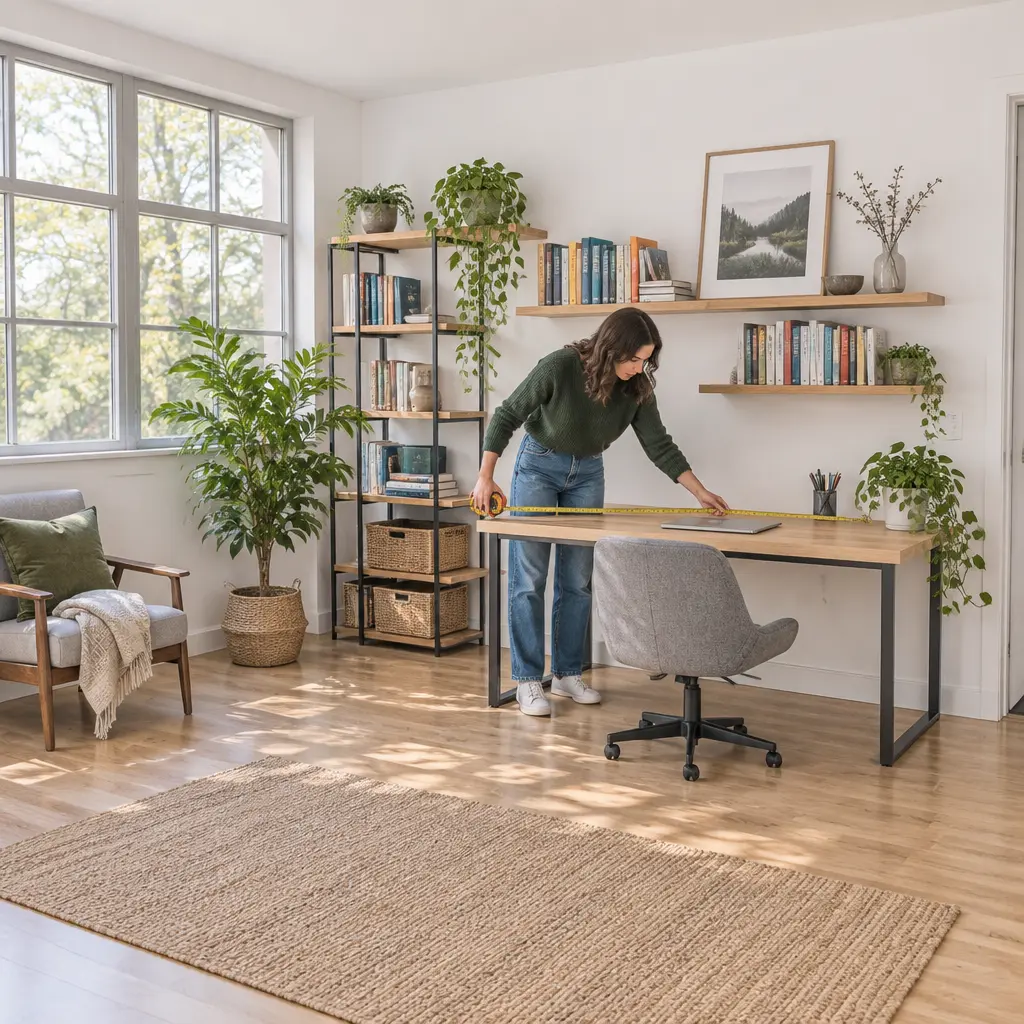
Reducing unnecessary furniture can open circulation paths and make a room feel more spacious without changing its floor area. This is useful in apartments, shared rooms, and multipurpose spaces. A practical assessment begins with the room’s activities: measure walkways, account for doors and drawers opening, and preserve clear access to frequently used items. A simple floor plan or paper templates can help test arrangements before furniture is purchased.
Simpler Cleaning and Maintenance
Fewer objects and accessible surfaces can reduce the time needed to dust, vacuum, and organize. Furniture with straightforward construction may also be easier to clean and repair. However, low-maintenance performance depends on material choice: pale upholstery may show stains, open shelving can collect dust, and delicate finishes may require special care. A minimal room is most practical when its materials suit the household’s routines.
Resource Use and the Limits of “Less”
The environmental case for minimalist furniture is strongest when it prevents unnecessary purchases and supports long service life. The United Nations Environment Programme reports that buildings and construction contribute approximately 37% of global energy- and process-related carbon dioxide emissions, a figure that underscores the importance of material and building choices broadly; it is not a furniture-specific emissions estimate. Furniture impacts also depend on extraction, manufacturing, transport, finishes, and end-of-life handling. Consider certified or reclaimed materials where appropriate, repair options, spare parts, and the likelihood that a piece will remain useful through a move or changing household needs.
Minimalist Furniture in Practice: Planning a Room That Works
Applying minimalism is a process of prioritizing rather than stripping a room bare. A useful approach starts with the activities a space must support, then selects furniture that serves those activities without obstructing movement or creating unnecessary duplication.
A Practical Room-Planning Sequence
- List the room’s everyday uses, including occasional needs such as hosting or working from home.
- Measure the room, door swings, windows, and access routes before selecting furniture.
- Choose essential pieces first, then check whether one adaptable item can replace a redundant one.
- Set storage locations for frequently used belongings so that open surfaces stay functional rather than becoming overflow areas.
- Review comfort, accessibility, durability, and maintenance before treating appearance as the final deciding factor.
For example, a small living room might use a compact sofa, a movable side table, and a closed cabinet instead of several occasional chairs and display units. The arrangement succeeds only if it still supports the household’s actual habits—reading, relaxing, hosting, or play—and leaves safe, comfortable routes through the room.
Common Mistakes to Avoid
The most common mistake is confusing minimalism with an empty or impersonal interior. Another is buying inexpensive, short-lived furniture to achieve a clean look, only to replace it repeatedly. Over-concealing belongings can also make daily tasks less convenient, while overly rigid matching can make a room feel sterile. A successful minimalist interior can include art, color, inherited objects, and textiles; the test is whether each contributes to use, comfort, or meaning.
Conclusion: When Minimalist Furniture Does More
Minimalist furniture does more when function, visual restraint, negative space, and durable materials work together. Streamlined seating, integrated storage, and adaptable pieces can make a room more usable, but their benefits depend on comfort, practical planning, and long-term value. The wider construction sector’s substantial climate impact reinforces the case for thoughtful material choices, while not serving as a direct measure of furniture emissions. Start by identifying what a room needs to support, keep the pieces that serve those needs, and favor furniture that can be maintained and used for years.
Sources: United Nations Environment Programme, “Building Materials and the Climate: Constructing a New Future,” 2023, https://www.unep.org/resources/report/building-materials-and-climate-constructing-new-future; U.S. Environmental Protection Agency, “Reducing and Reusing Basics,” https://www.epa.gov/recycle/reducing-and-reusing-basics; Encyclopaedia Britannica, “Form follows function,” https://www.britannica.com/art/form-follows-function.