
Furniture design is the planning of how furniture looks, works, fits a space, and supports the people who use it. It matters more than many people realize because a chair, desk, or bed can shape comfort, posture, movement, accessibility, and even how efficiently a room is used. The World Health Organization estimates that 1.3 billion people worldwide experience significant disability, underscoring why inclusive design matters; meanwhile, the U.S. Environmental Protection Agency reports that Americans spend about 90% of their time indoors, making the quality of indoor environments consequential. From ergonomics and accessibility to sustainability, safety, and emotional well-being, furniture design is not merely decoration—it is part of how everyday environments function.
Furniture design and human well-being
Furniture design is the discipline of shaping objects for sitting, sleeping, working, storing, and other activities while balancing function, comfort, safety, appearance, and material use. The International Ergonomics Association defines ergonomics as the understanding of interactions among people and other elements of a system, applied to optimize human well-being and overall system performance. Applied to furniture, that principle means a product should respond to the body and task rather than forcing the user to adapt to an unsuitable object.
Important characteristics include dimensions, adjustability, support, stability, materials, maintenance, and how furniture relates to the surrounding room. Hyponyms—the more specific forms of furniture design—include ergonomic, accessible, sustainable, modular, and child-safe design. These categories overlap: an adjustable desk may improve fit for different users, but its value also depends on stability, ease of operation, and whether it suits the work being done.
Ergonomic furniture design
Ergonomic furniture design adapts furniture to users’ bodies, tasks, and patterns of movement. For a chair, relevant features may include seat height and depth, back support, armrest position, and the ability to adjust the fit. For a workstation, desk height, screen placement, and space for movement matter as well. The U.S. Occupational Safety and Health Administration advises that workstation arrangements should support neutral postures and allow workers to adjust equipment to fit their needs.
A poorly fitted setup can encourage awkward postures or prolonged static positions, while a well-planned one can make comfortable working easier. Furniture alone, however, cannot prevent every musculoskeletal problem: task design, movement breaks, workload, and individual needs also matter. A practical office example is a chair and desk that can be adjusted together, rather than selecting a chair by appearance or price alone.
Accessible and inclusive furniture design
Accessible furniture design enables people with different abilities, body sizes, ages, and mobility needs to use furniture with greater independence. It can involve clear approach space, reachable controls, stable supports, suitable seat heights, and layouts that accommodate mobility devices. The World Health Organization’s estimate that 1.3 billion people—about 16% of the global population—experience significant disability makes inclusive design a major practical consideration, not a niche preference.
Inclusive design also benefits people whose needs change temporarily or over time, such as someone recovering from an injury or an older adult seeking easier transfers. In a community space, for example, a mix of seating heights and arm-supported chairs can offer more choices than a row of identical low seats. Furniture should be assessed in context: accessible dimensions are less useful if circulation routes are blocked or essential controls are difficult to reach.
Furniture design and space efficiency
Furniture design affects how people move through and use a room. Scale, placement, storage, and adaptability determine whether a space feels usable or obstructed. This is especially relevant in smaller homes, shared work areas, classrooms, and healthcare settings, where one room may need to support multiple activities. The U.S. Environmental Protection Agency’s estimate that people spend about 90% of their time indoors helps explain why the arrangement and usability of indoor environments deserve attention.
Modular and multifunctional furniture
Modular furniture consists of components that can be rearranged or combined, while multifunctional furniture performs more than one role. Examples include stackable chairs, extendable tables, storage beds, and desks that can be reconfigured for different tasks. These designs can help a room adapt as household needs or working patterns change, but flexibility should not come at the expense of stability, comfort, or straightforward use.
A real-world application is a small apartment where a folding table serves as a dining surface and a work area. Its success depends on more than compactness: it must be easy to open, safely supported, and appropriately sized for both activities. When planning a room, a simple diagram showing furniture footprints and walking routes can reveal conflicts before purchase.
Storage and circulation
Storage design determines how belongings are organized and accessed; circulation design concerns the paths people take through a space. Well-integrated storage can reduce clutter and keep frequently used items within reach, while thoughtful furniture placement helps preserve clear routes. These factors influence safety and daily convenience, particularly for children, older adults, and people using mobility aids.
A useful planning method is to identify the room’s primary activities, map door swings and movement paths, and then choose furniture that supports those uses. For instance, a storage unit may provide valuable capacity but become a poor choice if its doors block a route or its contents are difficult to reach. The best solution balances usable storage with clear, functional space.
Furniture design, sustainability, and safety
Furniture design influences the resources used to make a product, how long it lasts, whether it can be repaired, and how it is ultimately reused or discarded. It also affects everyday safety through structural stability, material choices, and appropriate use. Considering these issues at the design stage can help avoid products that are difficult to maintain, unsuitable for their setting, or quickly replaced.
Sustainable and durable furniture
Sustainable furniture design seeks to reduce environmental impacts across a product’s life, from material sourcing and manufacturing to transport, use, repair, and end-of-life. Strategies include selecting responsibly sourced materials, designing durable joints, making parts replaceable, and avoiding unnecessary material complexity. The U.S. Environmental Protection Agency’s sustainable materials management framework emphasizes considering materials throughout their life cycle rather than focusing only on disposal.
Durability is a practical sustainability measure: furniture that remains useful longer may delay replacement, especially when it can be repaired or adapted. Buyers can look for clear material information, replaceable hardware, repair support, and construction suited to the intended level of use. A lower purchase price does not necessarily mean lower long-term cost if the item wears out quickly or cannot be repaired.
Safety and material selection
Safe furniture design accounts for stability, load capacity, sharp edges, pinch points, tipping hazards, and the properties of materials and finishes. The appropriate priorities vary by user and setting: children’s furniture may require particular attention to tip-over risks, while public seating must withstand frequent use and support a broad range of users.
Material choices can also affect indoor environments. The EPA notes that volatile organic compounds (VOCs) are emitted by some products and materials and that indoor concentrations can be higher than outdoor levels. This does not mean every furniture item creates a health hazard, but it supports checking product specifications, finishes, ventilation guidance, and relevant emissions certifications where available. Safe selection combines credible product information with correct installation and maintenance.
Furniture design and emotional experience
Furniture design shapes how a place feels as well as how it functions. Color, texture, form, and arrangement can communicate whether a room is formal, welcoming, calm, or energetic. Personal and cultural preferences differ, so appearance is not a universal formula; nevertheless, comfort and a sense of control over one’s surroundings are meaningful parts of everyday experience.
Aesthetics, identity, and comfort
Aesthetic furniture design combines visual qualities with practical use. The proportions of a table, the texture of upholstery, or the arrangement of chairs can influence how people interpret and use a room. In homes, furniture may express personal identity; in workplaces and public settings, it can help establish a coherent environment and signal how a space is intended to be used.
Visual appeal should complement rather than replace usability. A striking chair that is uncomfortable for its intended task, difficult to clean, or poorly sized for the room is not a successful solution. A useful evaluation asks whether the piece supports its purpose, fits the people who will use it, and suits the room’s atmosphere and maintenance needs.
How to evaluate furniture design before buying
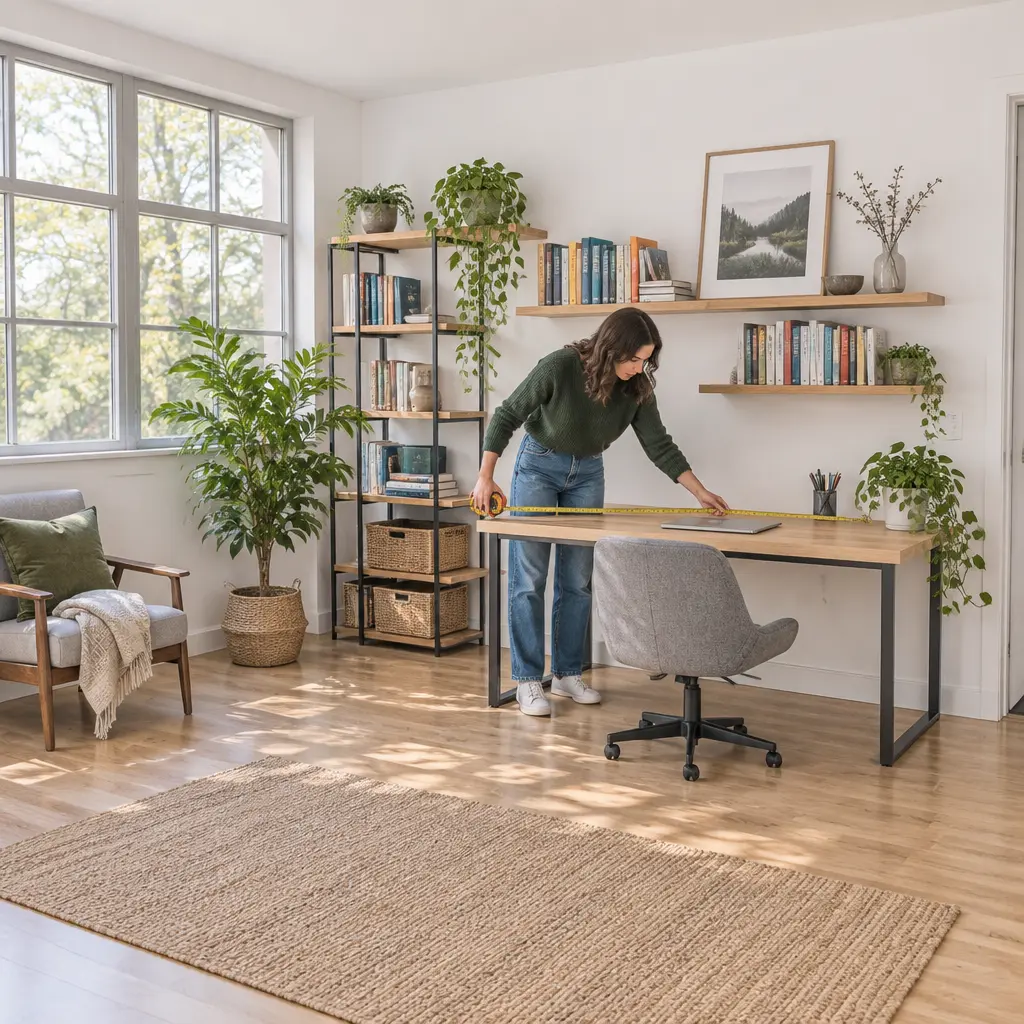
A considered purchase begins with the user and the task, not the product photograph. Measure the room and the furniture, check routes and access, and compare construction and care requirements. These steps connect the central design attributes—human fit, space efficiency, durability, safety, and appearance—to a real decision.
- Identify who will use the furniture and what activities it must support.
- Measure the item, room, doorways, and circulation routes before purchasing.
- Check adjustability, stability, comfort, materials, cleaning, and repair options.
- Consider accessibility and whether different users can operate or reach essential features.
- Compare expected lifespan and maintenance needs, not just the initial price.
A comparison chart can make trade-offs visible. For each option, record dimensions, adjustment range, material information, warranty, repairability, and suitability for the intended users. This is particularly helpful when comparing office chairs, where appearance alone may conceal important differences in fit and function.
Conclusion: furniture design is everyday infrastructure
Furniture design matters because it connects human well-being with the practical organization of indoor space. Ergonomic and inclusive design can better accommodate different bodies and tasks; modular planning can make rooms more adaptable; sustainable construction and repairability can extend product life; and thoughtful material and safety decisions can support healthier, safer environments. Aesthetics matter too, but work best when joined to comfort and purpose.
Before choosing your next piece, measure the space, consider the people who will use it, and check how it performs over time—not only how it looks on day one. For further guidance, consult occupational ergonomics recommendations, accessibility resources, and product information on materials, maintenance, and repair.
Sources: World Health Organization, Disability, https://www.who.int/news-room/fact-sheets/detail/disability-and-health; U.S. Environmental Protection Agency, Indoor Air Quality, https://www.epa.gov/report-environment/indoor-air-quality; International Ergonomics Association, What Is Ergonomics?, https://iea.cc/about/what-is-ergonomics/; U.S. Occupational Safety and Health Administration, Computer Workstations eTool, https://www.osha.gov/etools/computer-workstations; U.S. Environmental Protection Agency, Sustainable Materials Management Basics, https://www.epa.gov/smm/sustainable-materials-management-basics; U.S. Environmental Protection Agency, Volatile Organic Compounds’ Impact on Indoor Air Quality, https://www.epa.gov/indoor-air-quality-iaq/volatile-organic-compounds-impact-indoor-air-quality.


