
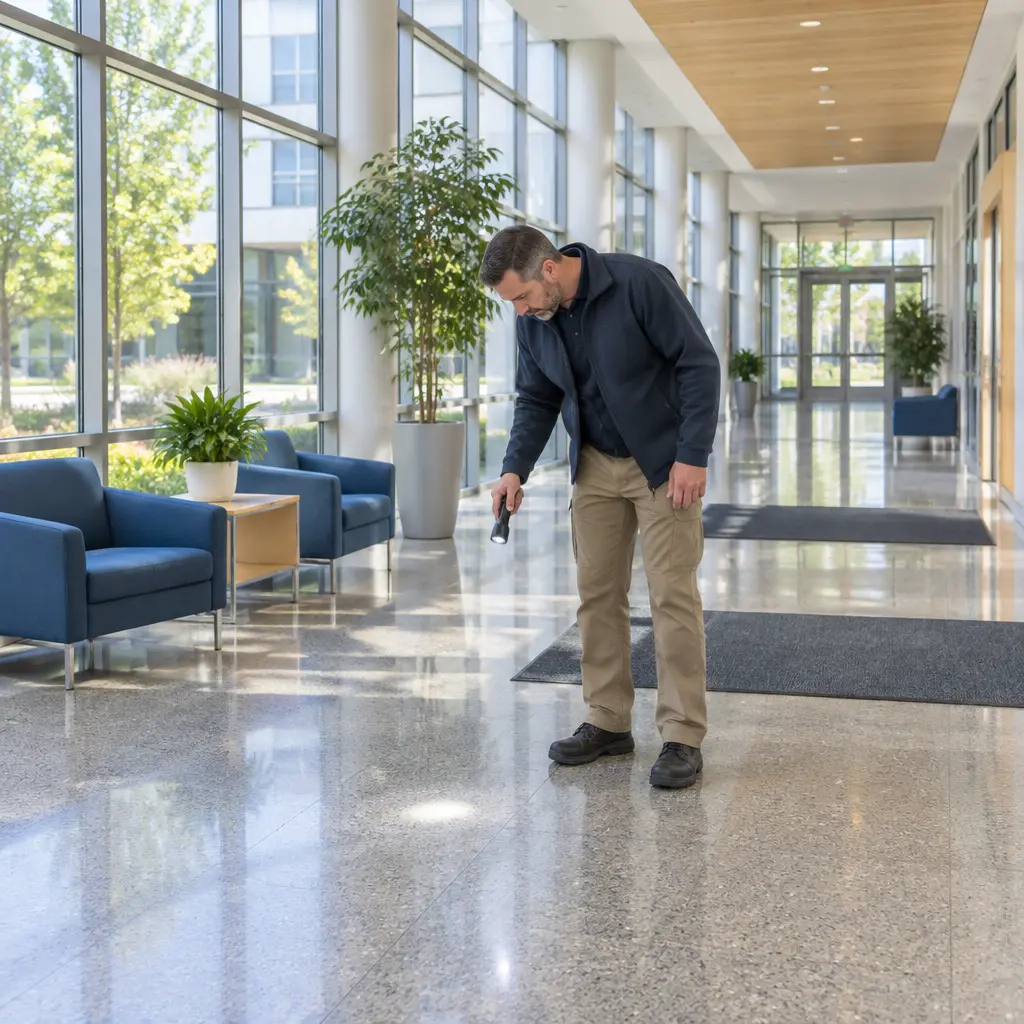
Material-led durability is the ability of a product or surface to resist damage and retain useful performance because of its material properties and construction. In practice, however, wear resistance alone does not determine durability: the relevant test is how well a material withstands the actual use, cleaning, repair, and replacement schedule. That distinction matters across flooring, upholstery, work surfaces, and building finishes. For example, the Resilient Floor Covering Institute notes that flooring performance depends on factors including traffic, maintenance, installation, and product selection—not just the wear layer. A sound assessment therefore connects material properties and standardized tests to real maintenance frequency, lifecycle costs, and field evidence.
Wear resistance defines material-led durability
Wear resistance is a material’s ability to withstand surface loss, scratching, abrasion, or other damage caused by repeated contact. The National Institute of Standards and Technology (NIST) describes abrasion as mechanical wear involving the removal or displacement of material through rubbing or contact. In product selection, “material-led durability” is a practical assessment approach rather than a single universal engineering standard: it asks whether a material’s tested properties and design are suitable for the exposure it will actually receive.
The key characteristics include abrasion resistance, hardness, impact resistance, stain and chemical resistance, moisture response, and repairability. These properties are related but not interchangeable. A hard coating may resist scratching yet chip under impact; a stain-resistant textile may still abrade quickly at a high-contact edge. Test results also depend on method and conditions. ASTM International, for instance, publishes separate test methods for abrasion of textiles and for abrasion resistance of resilient flooring, so figures from different methods should not be treated as directly equivalent.
Relevant material families include resilient flooring such as vinyl, linoleum, and rubber; textile surfaces such as carpet and upholstery; hard finishes such as ceramic tile, stone, and coated wood; and engineered surfaces such as laminates. Each has distinct failure modes and care requirements. This leads to the practical question: does the material’s measured resistance remain adequate between the cleanings, inspections, and repairs the site can realistically provide?
Abrasion, scratching, and surface loss
Abrasion is gradual material damage caused by friction, often from footwear, furniture, grit, or equipment. It may appear as gloss loss, thinning, pilling, or visible wear paths. ASTM D4060, the Taber Abrasion Test, measures the abrasion of organic coatings under specified test conditions; ASTM D3884 addresses abrasion resistance of textile fabrics using a rotary platform method. Because the tests use different equipment and procedures, a test rating is meaningful only when the method, specimen, and acceptance criteria are reported.
In a building, abrasive soil can accelerate floor wear. The Carpet and Rug Institute’s maintenance guidance emphasizes removing tracked-in soil with entrance mats and regular cleaning. That illustrates why an abrasion-resistant finish is not a substitute for basic soil control: maintenance can reduce the abrasive load that reaches the surface in the first place.
Impact, moisture, and chemical resistance
Impact resistance concerns sudden loads such as dropped objects or rolling equipment, while moisture and chemical resistance describe performance under spills, humidity, disinfectants, and cleaning agents. These properties determine whether wear becomes a cosmetic defect or a functional failure. Porous materials may stain or swell when liquids remain on the surface; brittle materials may chip under concentrated impact; coatings may soften or discolor when exposed to incompatible chemicals.
Maintenance specifications should therefore identify approved cleaners, dilution, dwell time, rinse requirements, and restrictions on tools or pads. The U.S. Environmental Protection Agency’s Safer Choice program evaluates cleaning products against criteria that include performance and ingredient characteristics, but a product’s suitability for a particular finish still needs to be confirmed by the material manufacturer. A cleaning routine that protects hygiene but damages a coating can shorten service life rather than extend it.
Maintenance frequency determines real-world durability
Maintenance frequency is the interval between planned actions such as daily cleaning, periodic deep cleaning, inspection, refinishing, or repair. It affects durability by controlling how long soil, moisture, spills, and small defects remain on the surface. The U.S. General Services Administration’s facilities guidance treats preventive maintenance as a planned activity intended to preserve building systems and reduce avoidable deterioration. For finish materials, the same principle applies: service life depends partly on whether routine care occurs before minor damage becomes extensive.
A product’s laboratory performance assumes controlled exposure; a working building has changing traffic, staffing, weather, and cleaning capacity. The Carpet and Rug Institute recommends frequent vacuuming in high-traffic areas and prompt attention to spills, while the National Wood Flooring Association advises using appropriate cleaning methods and avoiding excess water on wood floors. These recommendations show that “durable” is conditional: performance depends on matching care to material and exposure.
Routine cleaning and preventive care
Routine cleaning removes contaminants before they cause abrasion, staining, or chemical damage. A useful plan differentiates zones rather than assigning the same frequency everywhere: entrances and corridors may need more frequent soil removal than low-traffic rooms, while food-service or healthcare areas may require more frequent cleaning for hygiene. Entrance matting, walk-off zones, furniture glides, and prompt spill response can reduce exposure without changing the surface material.
The maintenance schedule should be feasible for the people and budget available. If a finish requires frequent specialized treatment that a facility cannot reliably provide, its nominal wear rating may not translate into long service life. Conversely, a material with moderate test performance may perform well where traffic is light and care is consistent.
Inspection, repair, and refinishing intervals
Inspection identifies early signs of failure—loose seams, chipped edges, worn protective layers, moisture intrusion, or recurring stains—while repair limits the spread of damage. Refinishing and recoating can restore some surfaces, but feasibility varies: solid wood can often be sanded and refinished, whereas many thin-layer products cannot. A lifecycle plan should record the expected inspection interval, repair method, material compatibility, and point at which replacement becomes preferable.
There is no universal maintenance interval that applies to every material. Manufacturers’ instructions, warranties, traffic class, environmental exposure, and observed condition should guide the schedule. For public or commercial spaces, maintenance logs can reveal whether a surface is deteriorating because the material is unsuitable or because the planned care is not being delivered.
Lifecycle assessment connects wear ratings to maintenance reality
Lifecycle assessment compares a material’s performance and costs over its period of use, including initial purchase, installation, cleaning, repair, downtime, and replacement. The National Institute of Standards and Technology’s Handbook 135 provides a federal methodology for life-cycle costing of buildings and building systems. Its central relevance here is that the lowest first cost is not necessarily the lowest total cost: repeated maintenance or premature replacement can outweigh initial savings.
A practical comparison should combine standardized test evidence with field conditions. At minimum, record the exposure, test method, expected maintenance frequency, repairability, replacement access, and likely service life. Where a product’s service-life claim is not supported by comparable field data, treat it as an estimate rather than a guarantee.
Reading test results in context
A wear-test result indicates performance under a defined procedure; it does not automatically predict years of use. ASTM test methods specify apparatus and conditions, but actual outcomes vary with soil, footwear, cleaning chemistry, installation quality, and traffic intensity. Compare products only when the test method and reporting basis match, and ask suppliers for the full test reference rather than an isolated number or marketing label.
A useful evidence hierarchy is to start with relevant standardized tests, then check manufacturer care instructions and warranty limits, and finally review comparable installations or pilot results. For high-cost or high-traffic projects, a sample installation can expose practical issues such as visible scuffing, cleaning time, or seam performance before full deployment.
Lifecycle cost and replacement decisions
Lifecycle cost includes the cost of keeping a material serviceable, not only buying it. A simpler comparison can estimate total cost over a chosen period by adding purchase and installation, scheduled cleaning, periodic restoration, repairs, and replacement, then accounting for downtime or disruption. The model should use site-specific labor and maintenance assumptions; generic service-life estimates can mislead if they assume a different traffic level or care schedule.
Replacement is appropriate when continued repair costs, safety concerns, hygiene requirements, or poor appearance outweigh the benefits of retaining the surface. It may also be possible to replace only high-wear zones or use modular products that permit localized repair. This can reduce material waste and disruption, provided replacement components remain available and visually compatible.
Material selection should match use and care capacity
Material selection is strongest when it begins with the exposure profile rather than a preferred product category. A school corridor, hotel lobby, laboratory, and private residence impose different combinations of traffic, spills, cleaning chemistry, and appearance expectations. The design team should translate these conditions into measurable requirements and confirm that the proposed maintenance plan is operationally realistic.
A practical decision framework
Use the following sequence to assess material-led durability:
- Define expected traffic, contaminants, moisture, impact, and appearance requirements.
- Identify likely failure modes and select relevant standardized tests for those risks.
- Compare test results only when methods and reporting units are comparable.
- Confirm approved cleaning products, tools, frequency, and repair procedures.
- Estimate lifecycle costs using realistic local labor, access, and replacement assumptions.
- Validate the choice through reference installations, a sample area, or a pilot where stakes are high.
This framework prevents a common procurement error: selecting the highest abrasion rating while overlooking maintenance burden, moisture sensitivity, or repairability. It also makes specifications more accountable by linking product claims to the conditions that will determine performance.
Field evidence and continuous improvement
Field evidence is the observed performance of installed materials under actual operating conditions. Facilities can track cleaning hours, repair frequency, complaints, visible wear, and replacement dates by location. Comparing those records with traffic and maintenance logs helps distinguish a material problem from a process problem. For example, repeated wear near entrances may indicate inadequate matting or soil control, while localized edge damage may point to installation or detailing issues.
A simple visual aid can make the comparison clearer: a lifecycle matrix with material options in rows and abrasion evidence, cleaning frequency, repairability, expected service life, and total cost in columns. A second chart can plot maintenance effort against observed condition over time. These tools do not replace engineering judgment, but they help decision-makers see trade-offs that a single wear score conceals.
Conclusion: durability is tested between maintenance visits
Wear resistance describes a material’s response to defined forms of damage; maintenance frequency determines how real-world exposure is controlled; and lifecycle assessment connects both to cost and service life. Standardized tests are valuable, but their results must be interpreted alongside traffic, cleaning chemistry, repairability, installation, and operational capacity. The most durable choice is therefore not always the material with the largest laboratory rating—it is the material that reliably meets the site’s performance needs under a care schedule the organization can sustain.
Before specifying or replacing a surface, document exposure conditions, verify test methods, review care instructions, and estimate lifecycle costs. Facilities teams can improve future decisions by keeping maintenance and repair records and revisiting specifications when field performance differs from expectations. For further reading, consult the relevant ASTM test method, manufacturer maintenance documentation, and NIST life-cycle costing guidance.
Sources: National Institute of Standards and Technology, Handbook 135: Life-Cycle Costing Manual for the Federal Energy Management Program, https://www.nist.gov/publications/life-cycle-costing-manual-federal-energy-management-program; ASTM International, ASTM D4060, Standard Test Method for Abrasion Resistance of Organic Coatings by the Taber Abraser, https://www.astm.org/d4060; ASTM International, ASTM D3884, Standard Guide for Abrasion Resistance of Textile Fabrics (Rotary Platform, Double-Head Method), https://www.astm.org/d3884; Resilient Floor Covering Institute, Floor Covering Performance and Maintenance Resources, https://rfci.com/; The Carpet and Rug Institute, Carpet Maintenance Guidelines, https://carpet-rug.org/carpet-for-homes/cleaning-and-maintenance/; National Wood Flooring Association, Wood Flooring Maintenance, https://nwfa.org/; U.S. Environmental Protection Agency, Safer Choice Standard and Criteria, https://www.epa.gov/saferchoice/standard


